

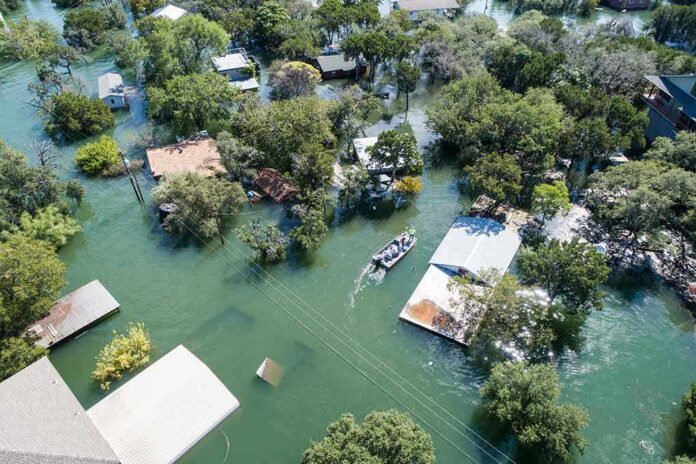
Lake Powell now sits barely 34 feet above the point where Glen Canyon Dam goes dark, turning a quiet Western drought into a looming test of power, water, and political will.
Story Snapshot
- Lake Powell hovers just over 3,524 feet, about 23–24% full and still falling fast.
- Glen Canyon Dam loses all hydropower at 3,490 feet, only about 34–36 feet below today’s level.
- Federal managers cut releases and warn of extremely low inflow, yet avoid saying “nearing shutdown” outright.
- Advocacy groups and YouTube channels shout crisis, while official data quietly show hard math catching up.
Lake Powell’s Level Is Now Inside The Danger Zone
Lake Powell is not empty, but it is alarmingly low. Official Bureau of Reclamation data and independent trackers show the reservoir at about 3,524 to 3,526 feet above sea level, depending on the day. That sounds high until you know the key line: 3,490 feet. Below that elevation, Glen Canyon Dam’s turbines stop spinning and hydropower ends. Right now, the lake is only about 34 to 36 feet above that cutoff, after losing roughly 35 to 40 feet in a year.
The term “dead pool” confuses the picture. Dead pool, around 3,370 feet, is when water can no longer flow out of the dam at all. Hydropower dies much sooner, at what engineers call minimum power pool, the 3,490-foot line. Media headlines often mix these terms or stretch them for drama, but the real story is simple and serious: Powell is now close enough to minimum power pool that one more bad year could shut down a major Western power source.
Decades Of Drought Meet Slow Federal Action
The Colorado River Basin has been in a historic drought for more than twenty years. Scientists and federal analysts report that combined storage in Lake Mead and Lake Powell has fallen by over 40 percent since 2000. The Nature Conservancy calls the situation an “unprecedented challenge” for the river basin, with downstream states no longer getting the water they expected. In simple terms, the West promised more water than nature now delivers, and the reservoir system has been draining to cover the gap.
Policy did not help. Reports to Congress explain that since 2020, the federal government has reduced deliveries to Arizona, Nevada, and Mexico as levels at Lake Mead fell. Those cuts were late responses to years of overuse and optimistic planning. A recent scientific paper finds that under current rules both Mead and Powell face real risks of hitting critical levels like inactive and dead pools in coming decades. That finding lines up with what we see at Powell today: a big reservoir pushed down near its power cutoff, with very little safety margin left.
Emergency Measures Versus Crisis Narratives
Federal water managers are not sitting still. The Bureau of Reclamation’s Glen Canyon Dam operations page confirms that they expect very weak inflow this water year, only about 34 percent of the long-term average. To slow Powell’s decline, they have ordered smaller releases downstream and other emergency changes in how the whole system runs. These moves matter. Cutting releases can help keep Lake Powell dozens of feet higher than it would otherwise be, and that can delay the day hydropower shuts off.
Yet federal communication stays carefully technical. Officials speak in acre-feet, forecast ranges, and “operational tiers,” not plain warnings about lights going out in the West. Into that quiet gap rush advocacy groups and content creators. The Glen Canyon Institute, which has long favored draining Lake Powell, now cites every low reading as proof the reservoir is doomed, framing current levels as “nearing dead power pool” and pushing their broader agenda. On YouTube, channels post alarming titles about shutdowns being only a few dozen feet away and use simple linear models that often ignore federal interventions and natural swings.
If you care about Lake Powell, the Colorado River and … water, water, water … in our very dry state, join this open-invite online discussion with Bluff, Utah-based author Zak Podmore. #utpol pic.twitter.com/kX6cNUSEOw
— Kael Weston (@KaelWeston) July 14, 2026
What Happens Next If The Math Does Not Improve
If drought and weak snowpack continue, and if states keep fighting over cuts instead of making real changes, Powell’s decline will likely resume after any short-term bumps. Some independent models and public videos project the lake slipping below minimum power pool in the next two to three years unless inflows greatly improve. Peer-reviewed work backs the larger point: with current policy, there is a meaningful chance that Powell and Mead reach critical thresholds in the coming decades. The exact year is uncertain, but the direction is not.
For older readers who remember when these reservoirs seemed endless, this is the turning of an era. The Colorado River system cannot support old habits forever. Hydropower at Glen Canyon Dam may become the first big casualty. That would not be a sudden, freak event. It would be the logical result of many small decisions, made over decades, finally hitting the hard wall of physics. Water tables do not care about talking points. They answer only to snow, rain, rock, and honest arithmetic.
Sources:
abcnews.com, usbr.gov, youtube.com, facebook.com, lakepowell.water-data.com, watereducationcolorado.org, powell.uslakes.info, nature.org, colorado.edu, riversimulator.org, congress.gov