
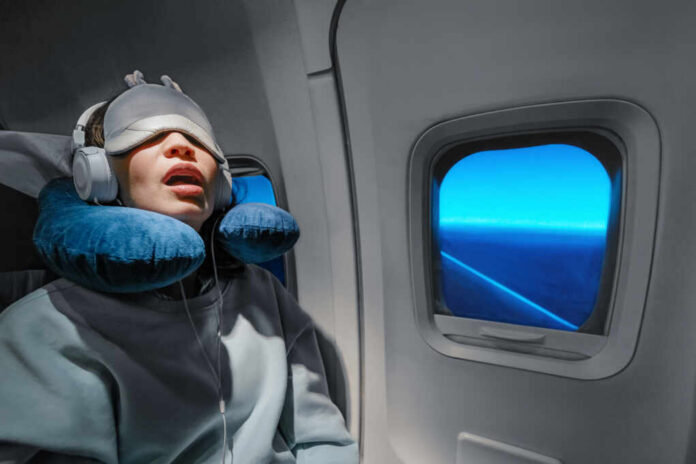
A massive study of 11 million U.S. veterans found that people with untreated sleep apnea are nearly twice as likely to develop Parkinson’s disease — and that a simple breathing device worn at night may cut that risk by 30%.
Story Snapshot
- Researchers studied over 11 million veterans and found untreated obstructive sleep apnea nearly doubled the risk of Parkinson’s disease compared to treated patients.
- Veterans who used a continuous positive airway pressure (CPAP) machine within two years of their sleep apnea diagnosis had a 30% lower risk of developing Parkinson’s disease.
- Women with sleep apnea faced four times the Parkinson’s risk compared to men, a finding that surprised researchers and demands further study.
- The study is observational, so it cannot prove sleep apnea causes Parkinson’s — but the size of the data and the treatment effect make the link hard to ignore.
The Study That Turned a Sleep Problem Into a Brain Warning
Researchers at Oregon Health and Science University published their findings in JAMA Neurology in January 2026. They combed through Veterans Affairs electronic health records from 1999 to 2022. The hazard ratio they found was 1.92 — meaning untreated sleep apnea patients were nearly twice as likely to get Parkinson’s disease. When researchers extended the observation window to one year, that ratio jumped to 2.8. Those are not small numbers.
The diagnostic methods were solid. Researchers validated their data with chart reviews showing a 94% accuracy rate for identifying sleep apnea cases and 79% for Parkinson’s disease cases. They also adjusted for a long list of health conditions — diabetes, high blood pressure, vascular disease, depression, anxiety, body weight, and even how often patients used health care. The association held up every time.
What a CPAP Machine Might Be Doing for Your Brain
CPAP therapy forces air through a mask while you sleep, keeping your airway open. The brain benefit may come down to oxygen. Sleep apnea causes repeated drops in blood oxygen throughout the night. Over years, that oxygen deprivation may damage brain cells. The theory is that this repeated stress triggers inflammation and harms the mitochondria — the energy engines inside neurons. Those are the same cells that die in Parkinson’s disease. Treating sleep apnea early may protect them.
Patients who started CPAP within two years of their sleep apnea diagnosis cut their Parkinson’s risk by 31%. That is a meaningful reduction for a disease that has no cure and few known prevention strategies. Parkinson’s disease affects about one million Americans, and that number is growing. If even a portion of those cases are connected to untreated sleep apnea, the public health math becomes urgent fast.
The Women’s Risk Finding Nobody Can Fully Explain Yet
Women in the study had four times the Parkinson’s risk tied to sleep apnea compared to men. That finding is striking because sleep apnea is far more commonly diagnosed in men. Women are often underdiagnosed because their symptoms look different — less loud snoring, more fatigue and insomnia. If women are going undiagnosed longer, their brains may be absorbing more cumulative oxygen deprivation before anyone catches it. That is a hypothesis worth testing urgently.
Researchers noted that the risk was elevated in women with both mild sleep apnea (hazard ratio of 3.17) and severe sleep apnea (hazard ratio of 3.42). The severity of sleep apnea did not change the overall odds ratio for men, which is itself a puzzle. If more oxygen deprivation meant more risk, you would expect worse sleep apnea to mean worse outcomes. That dose-response gap is one of the study’s open questions — and a reason scientists say more research is needed before drawing hard conclusions.
Why Doctors Are Cautious — and Why That Caution Has Limits
The study’s authors are clear that their design cannot prove cause and effect. It is possible that early Parkinson’s disease — before symptoms are obvious — disrupts sleep in ways that lead to a sleep apnea diagnosis. That would flip the arrow of causation. There is also the issue of scale: only 9% of sleep apnea patients in the study were documented as using CPAP, which limits how confident researchers can be about the treatment effect.
Those are fair scientific cautions. But the counter-evidence from skeptics is thin. No named researcher has published a specific rebuttal of the 1.92 hazard ratio or its confidence interval. No study has shown that treating sleep apnea increases Parkinson’s risk. The institutional resistance — neurology organizations have not yet endorsed sleep apnea as a Parkinson’s risk factor — looks more like bureaucratic lag than a scientific counterargument. Medicine has seen this pattern before with hypertension and Alzheimer’s disease, where strong observational data waited years for institutional blessing while patients went unprotected.
What You Should Do Right Now If You Snore
You do not need to wait for a randomized trial to act on this. If you snore loudly, wake up tired, or have been told you stop breathing at night, ask your doctor about a sleep study. Sleep apnea is treatable. CPAP is not glamorous, but it works. And if this research holds up — which the size and rigor of this study suggest it might — treating your sleep apnea could be one of the most important things you do for your brain in your 40s, 50s, and 60s. That is a risk-reward calculation worth taking seriously today.
Sources:
youtube.com, news.ohsu.edu, hmpgloballearningnetwork.com