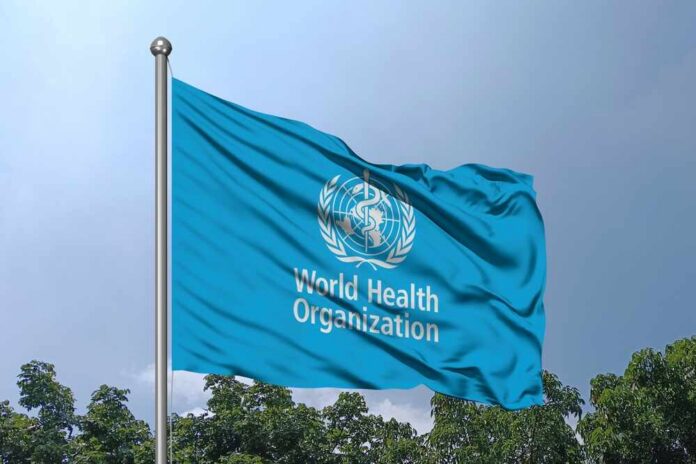
The WHO’s latest flu-shot recipe underscores a hard reality many Americans learned the hard way in recent years: health bureaucracies make sweeping recommendations that can shape U.S. policy, budgets, and even personal medical decisions.
Quick Take
- WHO released its recommended influenza vaccine strains for the 2026–2027 Northern Hemisphere season on February 27, 2026, after a multi-day expert consultation.
- The guidance continues the shift to trivalent flu vaccines, dropping the B/Yamagata component after the lineage was declared extinct.
- WHO recommends different virus “seed” strains depending on whether manufacturers use egg-based or cell/recombinant production methods.
- Vaccine strain selection happens 6–9 months before flu season, meaning officials must forecast viral evolution with imperfect data.
- U.S. regulators typically align with WHO guidance but can make domestic adjustments—an important sovereignty and accountability point for Americans.
What WHO Recommended for the 2026–2027 Flu Shot
WHO’s February 27, 2026 announcement laid out which influenza virus strains should be included in vaccines for the 2026–2027 Northern Hemisphere season, drawing on global surveillance and laboratory analysis coordinated through the Global Influenza Surveillance and Response System. The recommendations target the three main components used in modern seasonal shots—A(H1N1)pdm09, A(H3N2), and B/Victoria—aiming to better match what is expected to circulate next winter.
WHO’s guidance also separates recommendations by manufacturing platform. Egg-based production can push viruses to mutate in ways that reduce real-world match, so WHO lists distinct candidate strains for egg-based vaccines versus cell-based or recombinant vaccines. That distinction matters because Americans often assume “a flu shot is a flu shot,” when in practice the upstream production method can influence how closely the final product resembles viruses spreading in communities.
The Trivalent Shift: Why One Flu B Strain Was Dropped
A major structural change remains in place: WHO is recommending trivalent vaccines rather than the quadrivalent shots that included two influenza B lineages. The reason is straightforward in the available evidence—B/Yamagata has been described as extinct since 2024—so keeping it in the annual formula would consume manufacturing capacity for a lineage not being detected. For everyday patients, that means a simpler three-strain target, not an “extra” layer of protection.
For manufacturers and regulators, trivalent composition is more than a label change. Cutting a fourth component can simplify production and potentially expand output if facilities are strained, while also narrowing the bet officials are making about what will circulate. The tradeoff is that confidence in surveillance becomes even more important; if monitoring misses a resurgence or misclassification, the system has fewer “backup” components built into the shot.
How the Strain-Selection Process Works—and Its Built-In Limits
WHO’s strain selection depends on a longstanding global network rather than a single centralized lab. GISRS draws on data from more than 150 laboratories and partners that track influenza’s constant antigenic drift, then tries to predict which variants are most likely to dominate months later. The timeline forces choices early because manufacturers need lead time to produce and distribute doses ahead of fall and winter vaccination campaigns.
That forecasting window is also where public frustration can build. The same process that can deliver a strong match in one season can produce a mismatch in another, because influenza evolves fast and regional trends can shift. Some analysis cited in the research notes that even when match is imperfect, vaccination can still reduce severity—an important point for older Americans and those with underlying conditions, even when expectations should remain realistic.
What This Means for the U.S.: Alignment, Accountability, and Trust
U.S. agencies typically consider WHO’s recommendations while conducting their own strain-selection meetings and regulatory steps. That relationship is presented in the research as collaborative, with room for U.S.-specific adjustments, including differences for cell-based products. For Americans who are wary of global institutions steering domestic outcomes, the key issue is not whether international data exists—it does—but whether U.S. decision-makers communicate clearly and remain accountable for final choices.
In 2026, the practical takeaway is that families should expect the annual flu campaign to continue, with manufacturers already moving into production based on February’s guidance. The available sources emphasize that the goal is reducing severe disease, hospitalizations, and health-system strain. At the same time, the limited-government instinct applies here: public health messaging works best when it informs without coercion, respects medical choice, and tells the truth about uncertainty and evolving evidence.
Sources:
https://gisaid.org/resources/human-influenza-vaccine-composition/
https://afludiary.blogspot.com/2026/02/who-recommendations-for-influenza.html
https://www.cdc.gov/flu/season/2025-2026.html
https://www.vax-before-travel.com/2026/02/27/will-flu-shots-be-more-effective-2026-2027