

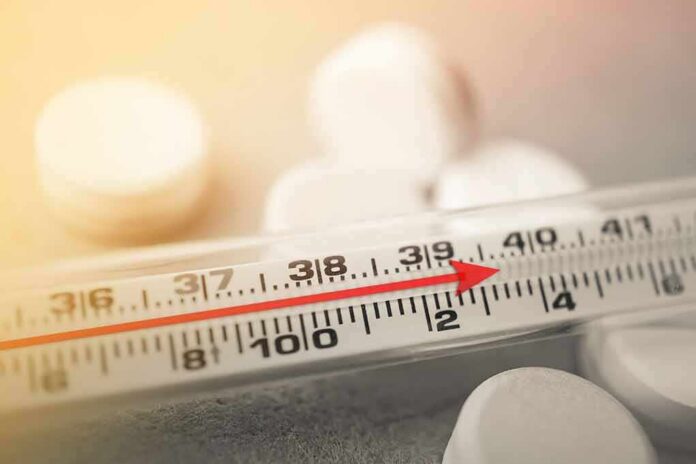
The number stamped on every thermometer box, taught in every health class, and quoted by every worried parent may no longer match the average American body.
Quick Take
- A 2020 study in the journal eLife found U.S. body temperatures have dropped steadily since the 1860s.
- Researchers studied over 677,000 readings from Civil War veterans, a 1970s health survey, and modern Stanford patients.
- The average decline was small, about 0.05°F per decade, but added up over more than a century.
- Major clinics like Mayo and Cleveland still use 98.6°F as a reference point, showing the debate is far from settled.
What The Landmark Study Actually Found
Researchers at Stanford published their findings in eLife on January 7, 2020. They tracked three separate groups: 23,710 Union Army veterans measured between 1860 and 1940, 15,301 people from a 1970s national health survey, and 150,280 modern patients treated at Stanford between 2007 and 2017. Combined, that is 677,423 temperature readings spanning 157 years.
After adjusting for age, height, weight, and time of day, the team found average body temperature dropped by about 0.03 degrees Celsius, roughly 0.05°F, with each new birth decade. Men born in the early 1800s ran about 0.59°C hotter than men born in 1997. Women showed a similar pattern, dropping 0.32°C across their measured birth years. The trend showed up in both sexes, which makes a simple measurement fluke less likely.
Why Our Bodies Might Run Cooler Today
Stanford researchers point to several possible reasons, though none are proven as the single cause. Modern Americans deal with far less chronic infection and inflammation than people in the 1860s. Better sanitation, vaccines, and antibiotics mean fewer lingering illnesses that once kept the body’s internal furnace running hot. Add in air conditioning, heated homes, and less grueling physical labor, and the body simply may not need to work as hard to regulate itself.
The famous 98.6°F number traces back to German physician Carl Wunderlich, who took temperatures from roughly 25,000 patients in Leipzig around 1851. His armpit readings, using the bulky thermometers of that era, became medical gospel for well over a century. Later studies kept finding lower numbers. A 1992 study landed near 98.2°F. A large British dataset found about 97.9°F. A 2008-2017 U.S. analysis found a similar 97.9°F average. This is a pattern seen across medicine, where an old benchmark outlives the tools and populations that created it.
Why Doctors Have Not Thrown Out The Old Number
Despite the research, mainstream medical institutions have not abandoned 98.6°F. The Mayo Clinic still lists it as the average, while noting a normal range between 97°F and 99°F or higher. The Cleveland Clinic calls it the commonly recognized normal temperature, while pointing out that a person’s own baseline can swing by a full degree. Neither organization has rewritten the textbook standard based on the Stanford findings.
A government-hosted clinical reference takes a similar stance, describing normal temperature as approximately 98.6°F while stressing that metabolism, sleep cycles, hormones, and activity level cause natural swings throughout the day. That same reference argues no single number can ever perfectly define a fever for every person, which cuts against treating any new average as a universal replacement.
What This Means For Patients And Parents
A lower population average does not mean the fever threshold is wrong. Most doctors still flag 100.4°F orally as the point of concern, separate from debates about what counts as “normal”. A dropping average and a useful fever cutoff are two different questions, and conflating them risks confusing patients who just want to know when to worry. Common sense says this: know your own normal temperature, not just the number on the box.
The honest takeaway sits between two extremes. The Stanford data is a large, carefully built dataset showing a real historical shift in American body temperature. But it is U.S.-specific, built from three very different measurement eras, and it does not prove exactly which modern habit caused the change. Science is still working out whether 98.6°F is outdated or just one data point in a much longer story.
Until bigger international studies confirm or challenge the pattern, the safest advice remains old-fashioned: trust your thermometer, know your own baseline, and call your doctor when something feels wrong, regardless of what the textbook number says.
Sources:
youtube.com, med.stanford.edu, elifesciences.org, stanmed.stanford.edu, nytimes.com, spokesman.com, mayoclinic.org