

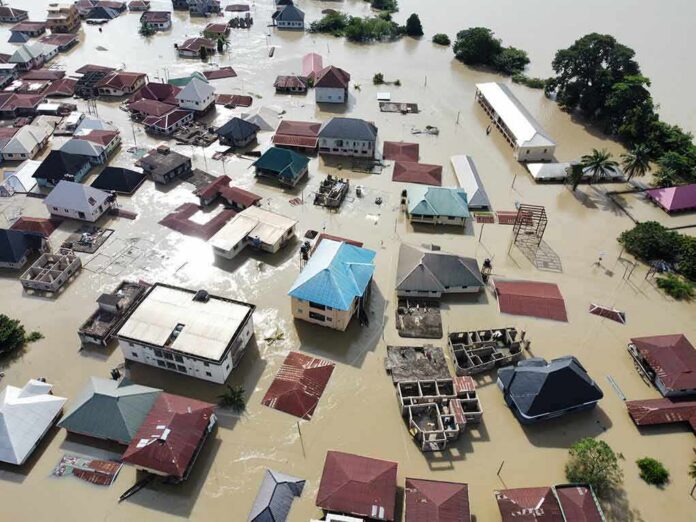
Developing nations are quietly paying a climate tax every time they borrow money, and the bill keeps climbing.
Quick Take
- Climate change added $62 billion to borrowing costs for the world’s most vulnerable countries between 2007 and 2016, with that penalty expected to double by 2028.
- Developing countries need $1.1 trillion to $1.8 trillion a year through 2030 just to cover climate-related costs.
- Their combined external debt already tops $12.3 trillion, squeezing national budgets before climate costs are even added.
- Clean energy investment in emerging economies must grow sevenfold, past $1 trillion a year, to stay on track for global climate goals.
Markets Are Already Pricing In Climate Risk
The Organisation for Economic Co-operation and Development found that climate change raised debt costs for the world’s 20 most climate-vulnerable countries, known as the V20, by $62 billion between 2007 and 2016. That “climate premium” is projected to more than double between 2019 and 2028. Lenders are not waiting for disasters to strike. They are already charging poorer nations more to borrow, based on how exposed those countries are to future climate shocks.
This is not a side effect. It is a direct cost baked into interest rates, bond yields, and credit ratings. Countries least responsible for global emissions are footing part of the bill through higher borrowing costs alone, separate from the cost of rebuilding after floods, droughts, or storms.
A Financing Gap Measured in Trillions
The United Nations Conference on Trade and Development estimates that climate-finance needs for developing countries will run between $1.1 trillion and $1.8 trillion annually from 2025 through 2030. Forty-eight developing nations face a combined yearly cost near $5.5 trillion when climate action, biodiversity protection, and pollution control are added together through 2030. Those numbers dwarf current pledges from wealthy nations, which have historically fallen short of promised climate-finance targets.
Debt Already Piling Up Before Climate Costs Hit
Developing countries are not starting from a clean slate. Their combined external debt reached $12.3 trillion in 2025, according to United Nations figures, and continues to climb. The pace of debt relief and restructuring remains too slow to close the gap between what these nations owe and what they need to invest in climate resilience. Every dollar spent servicing old debt is a dollar unavailable for storm walls, drought-resistant crops, or power grids.
Clean Energy Could Offset the Damage, With Real Investment
The International Energy Agency says annual capital spending on clean energy in emerging and developing economies must expand more than sevenfold by the end of this decade, topping $1 trillion a year, to keep global net-zero targets within reach. That is a staggering ask for nations already strained by debt. But it also points to an opportunity: energy investment that lowers long-term costs and reduces dependence on volatile fuel imports.
Research backs up what bond traders already sense. A study of 46 advanced and developing countries found that 25 highly climate-vulnerable nations paid average borrowing costs 1.174 percentage points higher than their less-exposed peers, adding up to roughly $62 billion in excess debt costs over a decade. Separate research shows countries with more fossil-fuel dependence and higher carbon intensity face steeper borrowing costs, while those with stronger renewable energy shares pay less.
Sound Policy, Not Blank Checks, Is the Real Fix
None of this means endless foreign-aid transfers are the answer. Markets are already rewarding countries that build resilient infrastructure, diversify energy sources, and keep fiscal houses in order. The smarter path for struggling economies runs through debt restructuring tied to real investment, not open-ended pledges that wealthy governments have repeatedly failed to fully deliver. The International Monetary Fund notes that concessional financing and stronger adaptive capacity both reduce the odds of sovereign debt defaults tied to climate shocks.
The lesson for American readers is straightforward. Energy abundance, fiscal discipline, and market-driven investment do more to protect vulnerable economies than symbolic summits and unmet funding promises. The global economy is already pricing climate risk into every bond sale and credit rating. Ignoring that signal does not make the cost disappear. It only shifts who ends up paying it, and when.
Sources:
time.com, un.org, oecd.org, unctad.org, iea.org, cfr.org, imf.org, academic.oup.com, link.springer.com, adb.org, ecb.europa.eu, commission.europa.eu, cambridge.org, bradscholars.brad.ac.uk, cepal.org