
A chalky white spot on your tooth can heal itself without a drill ever touching it, as long as you catch it early enough.
Quick Take
- Dentists agree early, noncavitated tooth decay can remineralize and regain a smooth surface, mainly through fluoride.
- Dentist Ellie Phillips promotes a home routine using xylitol, timed brushing, and mouth rest to help reverse early decay.
- The American Dental Association backs fluoride as the leading tool for arresting or reversing lesions before they cavitate.
- Once a lesion becomes an actual hole in the enamel, professional treatment, not home care alone, is generally required.
What Dentists Actually Mean By A Reversible Cavity
The word cavity gets used loosely, but dentistry draws a sharp line. A noncavitated lesion is early damage to enamel that hasn’t broken through to form a hole. The American Dental Association states this stage can remineralize back to a smooth surface with the right care, and that fluoride is the main therapy for making that happen. Once the surface actually caves in, the situation changes.
Dentist Ellie Phillips built a large online following by walking patients through exactly this distinction. In one recent video, she lays out how early decay can sometimes heal without a filling, especially when caught in younger patients before the damage spreads deeper into the tooth. Her message isn’t that fillings are unnecessary. It’s that waiting and watching has a real place in modern dental care.
The Home Routine Behind The Claim
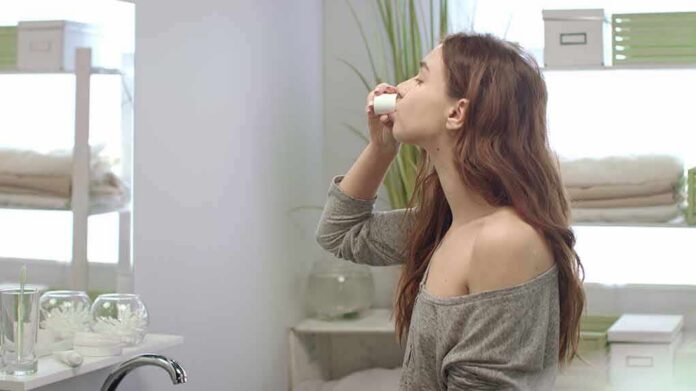
Phillips recommends a specific daily pattern: xylitol used at set intervals, deliberate gaps between meals to let the mouth rest, and brushing timed to support that resting period rather than disrupt it. She argues this approach nurtures healthy bacteria in the mouth, which in turn helps starve the bacteria that cause decay. It’s a lifestyle shift built around small, repeated habits rather than a single product.
This isn’t a fringe idea dressed up for social media. Research on carious lesion management shows fluoride products, whether painted on by a dentist or used at home in toothpaste, have the strongest evidence behind reversing or arresting both early and more advanced lesions. An expert panel convened by the American Dental Association’s Council on Scientific Affairs reached similar conclusions after a full systematic review of the evidence.
Where The Science Draws A Firm Line
Expert consensus guidelines note that some cavitated lesions, meaning ones that have already formed a visible hole, can sometimes be managed without a drill using treatments like silver diamine fluoride, but only when the decay hasn’t reached the tooth’s inner pulp. That’s a clinical call, made by a dentist examining the tooth, not a home decision. The deeper the damage, the fewer nonrestorative options remain on the table.
Public health groups echo the same core fact from a different angle. Community water fluoridation materials describe fluoride as a tool that rebuilds weakened enamel and reverses early signs of decay for entire populations, not just individual patients following a home routine. The science supporting fluoride’s role is old, broad, and well established across both clinical dentistry and public health policy.
What This Means Before Your Next Checkup
None of this makes the dental chair optional. A caries lesion that has cavitated, meaning the enamel has actually broken, generally still needs professional evaluation and often a filling to stop it from reaching the nerve. The reversible window applies specifically to early, noncavitated spots, and dentists are the ones equipped to tell the difference with an exam or an X-ray.
The practical takeaway cuts against the instinct to panic at the first mention of decay. Early lesions caught through routine checkups give families a real chance to reverse course with fluoride, better timing between meals, and products like xylitol. Catching the problem early, and trusting a dentist to properly stage it, matters more than any single home remedy.
Sources:
youtube.com, instagram.com, ada.org, pmc.ncbi.nlm.nih.gov, hub.hku.hk