

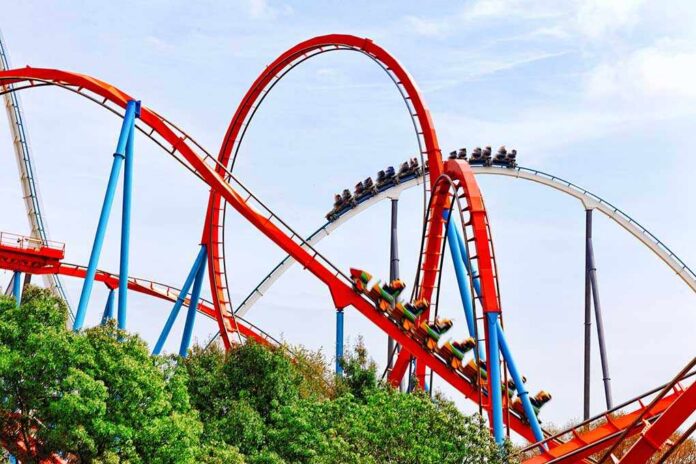
A famous California thrill ride is gone for good after more than 100 people said it left them with brain injuries, including some who needed emergency surgery.
Story Snapshot
- Six Flags Magic Mountain permanently retired its X2 roller coaster after nearly 20 years of operation.
- Three new lawsuits accuse Six Flags and manufacturer S&S Worldwide of causing catastrophic brain injuries.
- Attorneys say more than 100 riders have come forward with injury claims tied to the ride.
- Six Flags says X2 passed repeated safety tests and closed it anyway “because we believe it’s the right thing to do.”
- A wrongful-death case involving a 22-year-old rider was already settled before the closure.
Park Pulls the Plug on a Signature Attraction
Six Flags Magic Mountain in Valencia, California, announced on September 28 that it would permanently retire X2, a ride the park had run since 2002. Park president Brian Oerding said the coaster “consistently passed a multitude of safety tests,” but the company chose to close it anyway, calling it the right thing to do. The ride had already sat closed to the public since mid-July.
The closure comes after months of mounting legal pressure. Attorneys held a press conference detailing three fresh lawsuits filed in California Superior Court against Six Flags and S&S Worldwide, the company that built the ride’s trains. The suits accuse the businesses of running a defectively designed attraction and failing to warn riders about the risk of serious brain injuries.
More Than 100 Riders Say They Were Hurt
Lawyers representing the plaintiffs say they now count more than 100 clients who allege brain injuries of varying severity from riding X2 over the past two years. Two of the newest cases involve women who rode the coaster less than a week apart in July and later needed emergency brain surgery. Surgeons who treated them wrote that the injuries matched a rapid acceleration-deceleration event experienced on the ride.
The legal fight over X2 did not start this year. In 2023, the family of Christopher Hawley, a 22-year-old who died a day after riding X2 from severe brain bleeding, sued Magic Mountain. That case settled for an undisclosed amount last month, just before the fresh wave of lawsuits went public.
Six Flags Pushes Back on the Injury Claims
Six Flags has not conceded that the ride caused anyone’s injuries. In earlier court filings tied to the Hawley case, the company denied X2 caused his fatal brain bleed, saying testing showed the ride operated within accepted acceleration limits and arguing a pre-existing condition was to blame instead. The company has also said a “normal” rider following instructions would not suffer a traumatic brain injury on the coaster.
Six Flags says the ride went through daily inspections plus regular reviews by outside ride inspectors, state and insurance inspectors, and its own engineering and safety staff. The company has generally declined to comment further on pending litigation, citing its policy of not discussing active lawsuits. That leaves a real dispute in the record: riders and surgeons describing traumatic injuries against a company insisting its testing and inspections never found a problem.
Why the Case Is Hard to Settle Quickly
Amusement-ride injury cases rarely turn on whether something dramatic happened. They usually hinge on whether lawyers can prove a specific motion pattern actually caused the harm, separate from other explanations like pre-existing conditions. An industry group representing ride operators has pointed to independent scientific reviews concluding that rotational forces on rides like X2 do not pose a brain injury risk to the general public, a claim plaintiffs’ experts dispute directly.
One of the pending cases, filed by Sheila and Ari Katerelos alleging Sheila suffered a traumatic brain injury after riding X2 in February 2020, is already scheduled for trial in 2027. That timeline shows these disputes will likely play out in courtrooms for months or years, even though the ride itself is now closed for good.
What Comes Next for Riders and the Park
For now, Six Flags has removed the ride from operation rather than wait for the lawsuits to resolve, a decision that avoids further exposure while the litigation moves forward. The company’s own statement stopped short of admitting fault, framing the closure as a judgment call rather than an acknowledgment that the ride was unsafe. Whether that distinction holds up will depend on what juries decide in the cases still ahead.
Six Flags Magic Mountain retires X2 roller coaster amid brain injury lawsuits https://t.co/ZfY01FR7be
— Dallas Morning News (@dallasnews) September 30, 2026
The X2 saga highlights a tension many Americans recognize beyond amusement parks: a major company facing serious harm allegations while insisting its own testing cleared it of wrongdoing. Riders and their families are left waiting on court dates for answers, a reminder that accountability for big institutions often moves slower than the public wants.
Sources:
time.com, sixflags.com, nytimes.com, nbcnews.com, nbclosangeles.com, abc7.com, usatoday.com, latimes.com, fox9.com, msn.com