

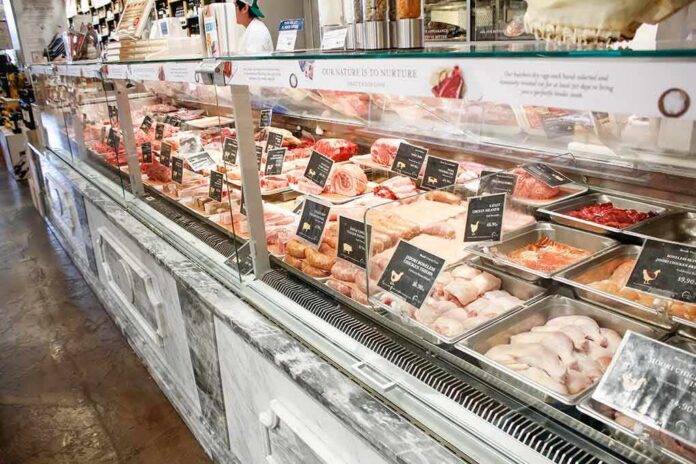
Millions of Americans build lunch around ham, turkey, and salami, unaware that public health researchers have called those same cold cuts a proven cause of colon cancer for more than a decade.
Quick Take
- The World Cancer Research Fund says processed meat, including chicken and turkey deli slices, causes colorectal cancer
- Food makers are testing lower-sodium recipes and new curing methods to make cold cuts less risky
- Federal regulators are still fighting over what “uncured” and “no nitrates added” labels actually mean
- Reformulated products have not been proven safer in long-term human health studies
A Sandwich Staple Carries A Serious Warning Label
The World Cancer Research Fund states there is convincing evidence that processed meat causes colorectal cancer, urging people to eat little, if any, of it. That warning does not stop at bacon and salami. The group’s definition covers sliced luncheon meats made from chicken and turkey, meaning the “healthy” deli turkey in many lunchboxes falls under the same caution as classic cured pork.
Food Companies Race To Build A Safer Cold Cut
Meat processors have real tools to work with. Government researchers documented a method called emulsion coating that cut salt content in chunked and formed ham by half, proving sodium reduction is technically achievable at scale. Companies are also leaning on potassium chloride as a partial salt substitute, chasing lower-sodium labels without sacrificing the taste and texture shoppers expect from their sandwich meat.
Sodium is not the only worry on the table. A French cohort study tracking processed meat intake found a 30 percent higher rate of cardiovascular disease for every 50 grams eaten daily, while unprocessed red meat showed no such link. That distinction matters. It suggests the processing itself, not just the animal protein, is driving much of the added risk researchers keep finding.
The Nitrite Fight Washington Still Has Not Settled
Curing chemistry sits at the center of the fight. The Department of Agriculture’s Food Safety and Inspection Service has moved toward banning the phrases “No Nitrate or Nitrite Added” and “Uncured” on products that actually use natural nitrite sources like celery powder during processing. Critics argue the current rule lets companies market cured meat as “uncured” simply because the nitrite came from a vegetable rather than a lab-made salt.
Regulators have not fully closed that gap. The agency recently granted temporary label allowances for establishments using natural sodium nitrite sources while it works through formal rulemaking. Until that process finishes, shoppers reading “uncured” on a package may be buying meat that went through the exact same chemical curing as the bacon next to it on the shelf.
Why A New Recipe Is Not The Same As A Safer Product
Here is the catch nobody puts on the package. Studies showing lower sodium or altered nitrite chemistry prove a lab can change a formula. They do not prove that formula lowers cancer or heart disease risk in people eating sandwiches for twenty years. The epidemiological studies linking processed meat to illness were built on the category as a whole, not on these newer reformulated versions.
Common sense says consumers deserve honest labels before they deserve marketing promises. A product cured with celery powder is still cured. A product with less sodium is not automatically a health food. Shoppers who want real answers should watch the ingredient panel, not the front-of-package claims, until Washington finishes the labeling rules it has been debating for years.
The deli aisle is changing, slowly and under pressure from both scientists and regulators. Until the rules catch up with the recipes, the safest move for most families is the oldest one: eat processed meat sparingly, read the label closely, and treat every “healthier” claim as a starting point for questions, not a final answer.
Sources:
menshealth.com, fsis.usda.gov, ams.usda.gov, ncbi.nlm.nih.gov, wcrf.org