

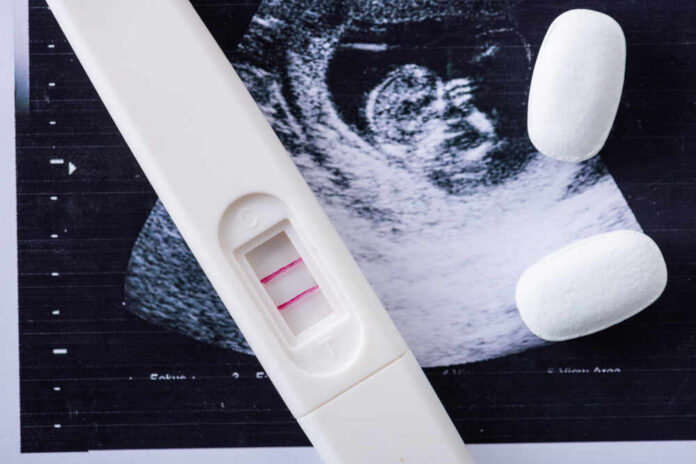
Infertility doesn’t just attack a woman’s body—it systematically dismantles who she believes herself to be, triggering a cascade of self-doubt that tears through her most intimate relationship like a wrecking ball through glass.
Story Snapshot
- Women struggling with infertility for 12+ months experience profound identity disruption, questioning their womanhood, attractiveness, and partnership roles
- Identity uncertainty directly fuels relational uncertainty, causing couples to perceive each other as obstacles rather than allies
- Structural equation modeling confirms a domino effect: identity change leads to identity uncertainty, which amplifies relational turbulence and partner interference
- The psychological damage extends beyond sadness to jealousy, anger, fear, and even elevated cortisol responses during partner interactions
- Research reveals identity uncertainty as the missing link explaining why infertility devastates marriages beyond the obvious grief of childlessness
The Identity Earthquake That Nobody Warns You About
When conception fails month after month, year after year, something shifts beneath the surface that doctors rarely discuss. Women experiencing infertility lasting twelve months or longer report a fundamental disruption in how they understand themselves. The desired identity of mother collides with the lived reality of empty arms, creating what researchers identify as identity change. This isn’t simple disappointment. The research examining over 150 women reveals alterations in self-perception so profound that women question their attractiveness, their value as partners, and their basic sense of womanhood. These aren’t fleeting doubts but persistent questions that erode self-clarity and generate what academics term identity uncertainty.
From Personal Crisis to Relationship Catastrophe
Identity uncertainty doesn’t remain confined to individual psychology. The 2022 study published in the Journal of Social and Personal Relationships demonstrates how personal confusion metastasizes into relational chaos. Women grappling with who they are become simultaneously uncertain about their relationships. They question whether their partners still find them attractive, whether the relationship has a future, and what role they occupy in their partnership. This relational uncertainty transforms normal couple interactions into minefields. Partners who might offer comfort are instead perceived as sources of interference, their well-meaning gestures interpreted through a lens of ambiguity and threat.
The Turbulence Nobody Sees Coming
Relational turbulence theory explains the mechanics of this destruction. Under conditions of uncertainty, negative emotions don’t just appear—they amplify. Anger burns hotter. Sadness cuts deeper. Fear paralyzes more completely. The research documents how women experiencing identity uncertainty perceive their partners as disrupting their goals rather than facilitating them, even when objective evidence suggests otherwise. Jealousy spikes. Perceptions of relationship instability skyrocket. The structural equation modeling confirms what therapists observe: identity change predicts identity uncertainty, which boosts both relational uncertainty and the perception that partners interfere rather than help. The relationship becomes another casualty of infertility’s reach.
Your Body Keeps the Psychological Score
The damage isn’t merely emotional or relational. Related research measuring cortisol responses reveals that uncertainty literally gets under the skin. Women facing relational uncertainty show intensified physiological stress responses to hurtful partner messages and paradoxically diminished responses to supportive ones. The body, tracking the mind’s confusion, reacts as if the relationship itself has become a threat. Chronic stress embeds in physiology. The woman experiencing infertility doesn’t just feel worse—her endocrine system reflects the turmoil, potentially compounding fertility challenges in a cruel feedback loop.
The Stages of Identity Dissolution
The journey through infertility follows predictable psychological stages: hope, denial, disappointment, treatment pursuit, and eventual acceptance. Each stage carries potential for identity shifts. Early hope preserves the mother identity as achievable. Denial protects against its loss. Disappointment signals the threat. Treatment becomes desperate preservation. Acceptance requires reconstructing identity without motherhood or with alternative paths. Women most vulnerable to identity uncertainty experience the largest shifts in core self-concept. Those whose sense of womanhood tightly intertwines with motherhood face the steepest psychological cliffs. The research suggests identity flexibility predicts resilience, but cultural and personal histories don’t always permit such flexibility.
Why Partners Become the Enemy
The study reveals a counterintuitive finding: identity uncertainty doesn’t directly increase perceptions of partner interference through some obvious mechanism. Instead, it operates indirectly, heightening relational uncertainty first, which then colors partner behavior as obstructive. A husband’s neutral comment about timing becomes evidence he’s not invested. A suggestion to relax feels like blame. Offers of support seem patronizing. The woman, unsure of herself and therefore unsure of the relationship, interprets ambiguous partner behavior pessimistically. Partners who were once sources of comfort transform into perceived obstacles. The relationship, meant to buffer life’s hardships, becomes another arena of distress.
What the Research Means for Suffering Couples
The findings carry practical weight. Identifying identity uncertainty as the critical mediator between infertility and relational damage points toward intervention targets. Couples therapy addressing infertility must tackle identity questions directly, not just grief or medical options. Women need space to reconstruct self-understanding in ways that preserve core worth independent of fertility outcomes. Partners require education that uncertainty drives negative interpretations, not actual relationship deterioration. Communication strategies reducing ambiguity—explicit reassurance, clear role negotiation, transparent emotional sharing—can interrupt the cascade from identity confusion to relational turbulence. The research doesn’t promise easy fixes, but it maps the terrain accurately enough that couples can navigate with eyes open rather than stumbling blind through compounding crises that destroy both self and partnership.
Sources:
5 Signs You’re Having an Identity Crisis – Lukin Center
Relational Uncertainty and Cortisol Responses to Hurtful Messages – PMC
Effects of Uncertainty in Close Relationships – Cambridge University Press
Communication and Relational Turbulence – Taylor & Francis Online
Identity Uncertainty and Relational Turbulence Study – SAGE Journals