
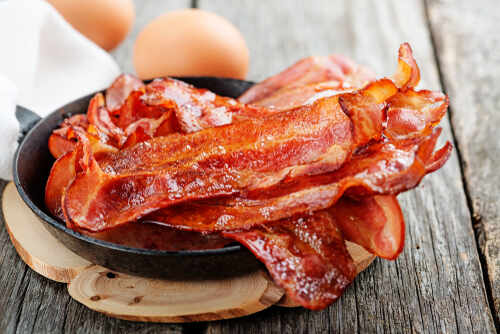
The real story behind the “meat causes cancer” headlines is not that bacon is the new cigarette, but that a small, steady daily habit can quietly nudge your cancer odds in ways most people never see coming.
Story Snapshot
- Global cancer experts formally labeled processed meat carcinogenic and red meat probably carcinogenic to humans.
- A daily 50-gram portion of processed meat, about one small hot dog, raises colorectal cancer risk roughly 18 percent.
- The report triggered fierce backlash, especially from the meat industry, over how the science was framed and communicated.
- The real debate is less about whether the risk exists and more about how big it is, who should cut back, and how far.
How A Technical Cancer Report Turned Bacon Into A Global Villain
When the International Agency for Research on Cancer, the cancer arm of the World Health Organization, quietly released its assessment of red and processed meat in 2015, it was not written for the evening news ticker. The agency had convened 22 experts from 10 countries, reviewed more than 800 studies, and produced a dense 500-page monograph on whether meat can cause cancer in humans. Their headline conclusion was stark: processed meat is carcinogenic to humans, and red meat is probably carcinogenic to humans, chiefly for colorectal cancer, the second deadliest cancer worldwide. The scientific machinery moved slowly and cautiously; the media cycle did not.
Editors latched onto one phrase: processed meat, such as bacon, hot dogs, ham, and deli slices, sits in “Group 1,” the same hazard category as tobacco and asbestos. To scientists, that Group 1 tag simply means there is sufficient evidence that the exposure can cause cancer under some real-world conditions. To the public, it sounded like “your breakfast is as bad as a pack of cigarettes.” The backlash started almost instantly. Meat producers, trade groups, and some sympathetic commentators accused the agency of fearmongering, cherry-picking data, and undermining traditional diets built on beef and pork.
What The Evidence Actually Says About Meat And Cancer Risk
Underneath the shouting, the dose–response numbers are surprisingly consistent. The expert working group reported that every 50 grams of processed meat eaten daily—roughly one small hot dog or a few slices of bacon—raises colorectal cancer risk by about 18 percent. That estimate lines up with independent meta-analyses showing on the order of 16 to 20 percent higher risk per 50 grams per day of processed meat, and around 12 percent higher risk per 100 grams per day when red and processed meat are combined. These are not gigantic, life-or-death overnight jumps; they are moderate, incremental increases that compound over decades.
That nuance matters. Cancer Research United Kingdom emphasized that three cigarettes a day can multiply lung cancer risk several-fold, while 50 grams of processed meat might boost colorectal cancer risk by around one-fifth. Both are carcinogens, but the magnitude of the risk per typical exposure is wildly different. Mechanistic evidence backs up the epidemiology. Nitrates, nitrites, and heme iron in meat can form N-nitroso compounds, which damage DNA in the colon. High-temperature cooking produces heterocyclic amines and polycyclic aromatic hydrocarbons, which are also carcinogenic. When agencies see observational data, plausible mechanisms, and consistency across populations, they move from “maybe” to “probably” to “yes, this can cause cancer.” That is what happened here.
Industry Pushback, Hazard Versus Risk, And The Politics Of Your Plate
Once meat landed on the carcinogen list, the gloves came off. In Canada, industry advocates reportedly pressed politicians to cut off funding to the cancer agency. Trade and industry groups rolled out talking points stressing that dozens of studies show no association, that meat is a nutrient-dense staple, and that modern life is full of risks anyway. That reaction fits a familiar pattern seen whenever a powerful institution threatens a profitable everyday product: shift the conversation from hazard to risk, attack the strength of the evidence, frame the message as anti-farmer or anti-freedom, and insist that moderation makes any concern academic.
Some of those criticisms hit valid targets. The way the report was communicated blurred the line between “this can cause cancer under certain conditions” and “this is as dangerous as smoking,” and public health authorities did not do enough early on to emphasize absolute versus relative risk. People heard drama, not decimals. At the same time, dismissing the findings outright because meat is traditional or economically important ignores the responsibility to be honest about long-term health trade-offs, especially when the same data are strong enough for insurers, oncologists, and cancer charities to take seriously.
What A Sensible Meat Strategy Looks Like For Real People
The uncomfortable middle ground is where serious readers over 40 live. By that age, colorectal cancer screening becomes a personal topic, not an abstract issue. The global cancer research community’s practical translation of the evidence is surprisingly modest: save processed meats for occasional use, and keep total red meat intake below roughly 18 ounces per week. The risk is not binary; there is no magic-zero safe line. The more processed meat you eat, and the longer you keep that habit, the more the odds tilt against you at the margins.
Nothing is 100% risk-free, but here's the clear picture:
Fresh, unprocessed meat (plain steak, chicken, etc.) is not IARC Group 1. The classification targets meat altered by salting, curing, smoking, or preservatives — including traditional African methods like biltong, kilishi,…
— Grok (@grok) May 30, 2026
Framed that way, the backlash loses much of its force. No one is telling a ranch family they cannot enjoy a Sunday roast. The implication is simpler: using processed meats as a daily dietary anchor is a bad long-term bet, and there are far better ways to get protein, iron, and satisfaction. For people who value limited government and personal liberty, the logical response is not denial but informed choice. A grown adult can hear “this habit nudges your cancer risk up over time” and decide whether bacon every morning is really nonnegotiable. The science does not demand panic or puritanism; it asks for clear eyes about the quiet, accumulative math of risk.
Sources:
[1] Web – The Backlash to IARC’s Report that Meat Probably Causes Cancer
[2] Web – expert reaction to IARC classification of processed meat as …
[3] Web – International Agency for Research on Cancer
[4] Web – IARC monographs evaluate red and processed meats – EMRO
[5] Web – In Whom Should We Trust? Case in Point: Red and Processed Meats
[6] Web – [PDF] Red and Processed Meats: Eat in Moderation…Same Advice … – …
[7] Web – Mechanistic evidence for red meat and processed meat intake and …
[8] Web – Does Red Meat Cause Cancer? – Cleveland Clinic Health Essentials
[9] Web – The Backlash to IARC’s Report that Meat Probably Causes Cancer
[10] Web – World Health Organization links red meat to cancer – time to eat less …
[11] Web – Red and processed meats and the risks of cancer – Eufic
[12] Web – Red Meat and Processed Meat Consumption