

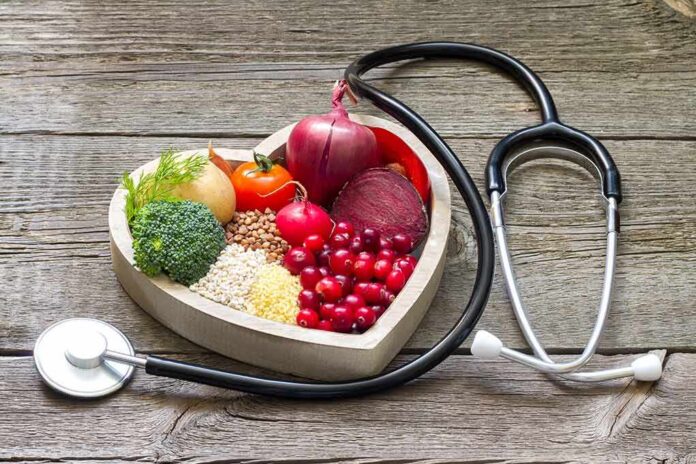
A person can eat perfectly clean for years and still watch their cholesterol number climb, because the liver — not the dinner plate — makes most of the cholesterol in the bloodstream.
Quick Take
- The liver produces roughly 75% of the body’s cholesterol, so diet alone rarely controls the number on a lab report.
- Insulin resistance, genetics, and conditions like familial hypercholesterolemia can push LDL up regardless of eating habits.
- Menopause and aging change hormone levels in ways that raise cholesterol even in lifelong healthy eaters.
- Doctors say a “healthy diet but bad labs” pattern is common and usually points to a deeper metabolic issue, not a diet failure.
The Liver, Not the Fork, Runs the Show
Family medicine physician Dr. Laurie Marbas has built a following explaining why cholesterol stays stubborn even for people who eat whole grains, vegetables, and legumes every day. Her core point: the liver manufactures most of the body’s cholesterol on its own, and dietary cholesterol intake does not automatically translate into higher blood levels. That means a clean diet is necessary but often not sufficient.
Research backs this up. A meta-analysis of fifty-five studies found that even a large jump in dietary cholesterol produced only a modest rise in LDL, ranging from about two to four and a half points for every extra 100 milligrams eaten. The body’s own production line often matters more than what lands on the plate.
Genetics Can Override Good Habits Entirely
Some people inherit gene variants that make their liver overproduce cholesterol or fail to clear it properly. Familial hypercholesterolemia is the best-known example, and it can keep LDL above 160 even in someone who never touches fried food or added sugar. Researchers note that a person’s LDL phenotype shows 40 to 75 percent heritability, with age, body fat, and insulin resistance adding to the picture.
Specific gene markers reinforce this. Studies on the ApoE gene show that certain variants raise cholesterol susceptibility, especially when combined with diets high in saturated fat. Another gene variant, called ABCG8, has been directly linked to both higher cholesterol and worse insulin resistance scores. None of this means diet doesn’t matter. It means genetics can set a ceiling that diet alone cannot break through.
Insulin Resistance Quietly Drives the Numbers Up
Marbas points to insulin resistance as one of the most overlooked drivers of high cholesterol. When cells stop responding properly to insulin, the liver churns out more triglyceride-rich particles and the body’s cholesterol cleanup crew, HDL, weakens. This creates a pattern researchers call atherogenic dyslipidemia — low HDL, high triglycerides, and small, dense LDL particles that are harder for the body to clear.
This matters because insulin resistance often develops silently, tied to visceral fat and lifestyle factors that build up over years. A whole food diet helps, but Marbas notes that reducing visceral fat also requires a moderate calorie deficit and consistent exercise, not diet quality alone. Someone can be eating the right foods while still carrying enough internal fat to keep triglycerides elevated.
Menopause Adds a Hormonal Curveball
Marbas has also highlighted how menopause changes cholesterol readings independent of eating habits. Declining estrogen affects how the liver processes lipids, and she has described being caught off guard by her own numbers during perimenopause despite decades of careful eating. Patients she treats often see cholesterol rise during this transition even when their food diary looks the same as it did in their thirties.
This lines up with the broader science. Lipid specialists describe hormonal shifts, aging, and adiposity as additional determinants of LDL levels that stack on top of genetic risk. A woman doing everything “right” nutritionally can still see her numbers move simply because her hormone profile changed.
What This Means for Anyone Frustrated by Their Labs
The takeaway isn’t that diet is pointless. It’s that blaming yourself for a stubborn cholesterol number ignores real biology. Genetic testing, insulin and triglyceride panels, and honest conversations with a doctor about family history matter as much as what’s on the plate. For many patients, the fix isn’t a stricter diet — it’s identifying which of these hidden drivers is actually running the show.
Patients skeptical of one-size-fits-all medical advice may find this framing refreshing. It respects personal responsibility while acknowledging that biology, not willpower, often decides the final number. That’s a more honest conversation than blanket diet shaming, and it’s one more doctors are starting to have out loud.
Sources:
youtube.com, telehealth.love.life, podcasts.apple.com, chefmartinoswald.substack.com, drtalks.com, api.substack.com, drlauriemarbas.substack.com, fountain.fm, plantstrongpodcast.com, soundcloud.com